Your Browser Is No Longer Supported. Please use an alternative browser to improve your experience and security.

Help & How to Use
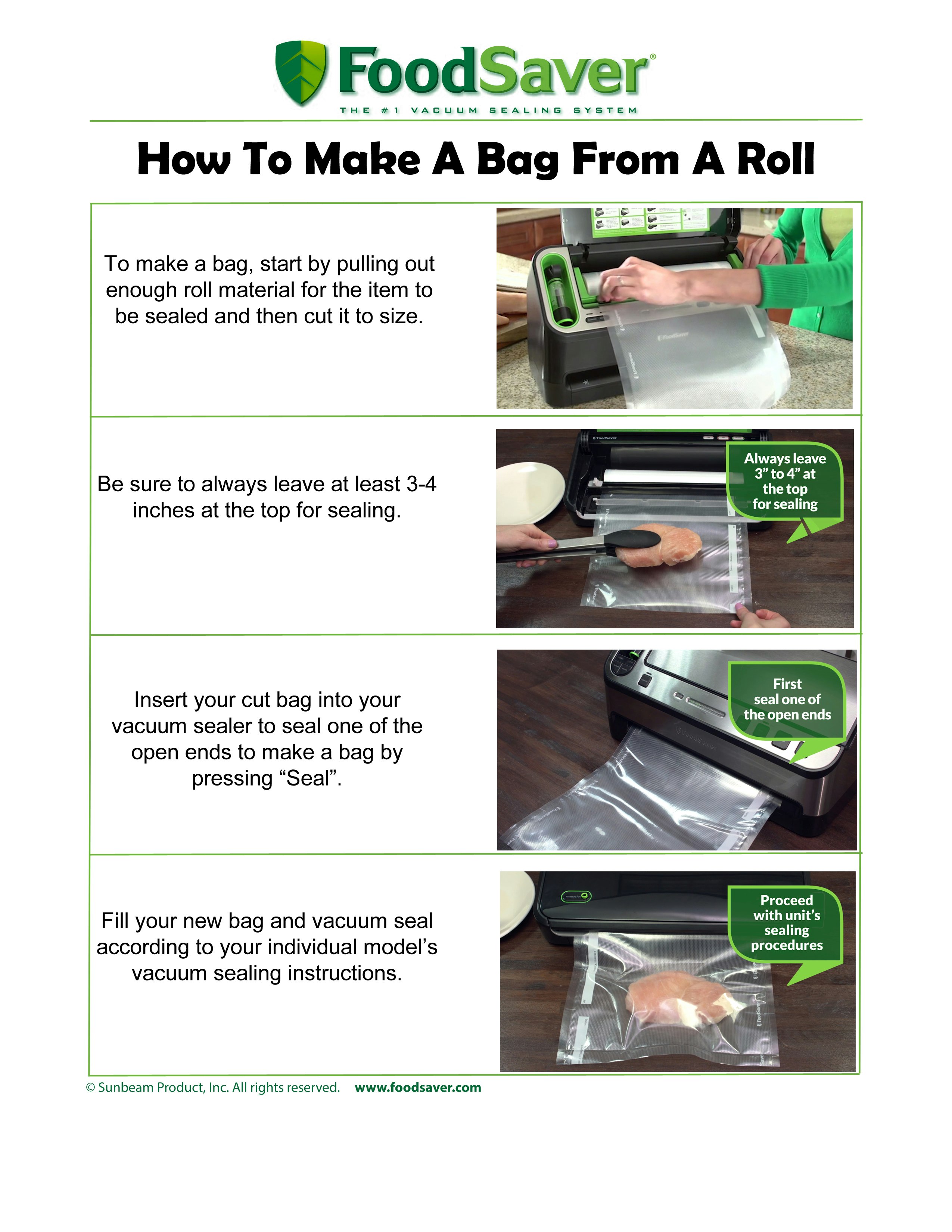
Examine seal of bag. A wrinkle along the seal may cause leakage and allow air to enter. Simply cut bag and reseal. Sometimes moisture or food material (such as juices, grease, crumbs, powders, etc.) along seal prevents bag from sealing properly. Cut the bag open, wipe top inside of bag and reseal.
If you are vacuum sealing sharp food items, bag may have been punctured. Use a new bag if there is a hole. Cover sharp food items with a soft cushioning material and reseal.
See Foods that Should Not be Sealed for information on how fermentation or the release of natural gases from inside the foods may have occurred.
A good way to test a bag is to just seal both ends of the bag-do not vacuum seal the bag. Submerge the bag in water for a few seconds and look for bubbles in the bag itself or near the seal strip area. If there are bubbles, the bag is defective or has been damaged from previous use. Use another bag.
Only place FoodSaver® bags inside simmering (not boiling ) water. Simmering is a food preparation technique in which foods are cooked in hot liquids kept just below the boiling point of water (which is 100 °C or 212 °F.
Try cutting off about 1/2 inch from the end of the bag. It is possible that the very end of the roll was compressed when rolled. Also, make sure you have made a straight cut. Check to see if you have the end of the bag over the gasket or into the vacuum channel. It should only go up to the gasket, no further.
Place the embossed (rough) side down. If the bag is curling (the end of the roll may do this), place the curled side down over the seal bar.
If your bag melts, the Sealing Strip may have become too hot. Always wait at least 20 seconds between seals for the appliance to cool down before you vacuum seal another item.
Place the embossed (rough) side down. If the bag is curling (the end of the roll may do this), place the curled side down over the seal bar and can be used either side up.